You do not have to quit your job to start a business. I spent over two years working a regular job before I made my first million.
The method is simple. Build the business outside your normal work hours, and only go full time when the numbers say so. I was making over $10,000 a month before I quit.
Here is how I would do it.
Pick a niche that solves a core problem
Every human action aims to improve health, wealth or relationships. Those are your three niches.
I started in fitness because that was my background. If you do not have a skill yet, pick a sector first, then learn the skill it needs. There are plenty of free resources online, including my free community for learning to build a business.
Hire a coach
At 23 I dropped out of college to start a business. I did not even know a coaching industry existed. Over my first two years, working on it full time, I made about $2,000 total.
Then I saw a Facebook ad for an online fitness business program. I paid $5,000 on a credit card I could not afford and made about $10,000 in my first week. That was not the whole story, but it was the catalyst for a clear plan. Over the next six years I went on to generate about $115 million.
Paying for a program removes the guesswork. The internet is full of conflicting advice. The coach does not have to be me and it does not have to be free. It has to be someone who has done what you are trying to do. Not hiring one sooner was one of my biggest mistakes.
Block 90 minutes every morning
When I had a job, I got up early and blocked the first 90 minutes for deep work on the business, before anything else. I even did it before the gym. If I left the work for later, it would get skipped, same as exercise.
Today my routine is gym, deep work, then a team call. But that early block was everything when I was working a job. If you do not block the time, it will not happen.
Sell before you build
Early on I delivered my fitness service on Zoom calls. No finished course. And a lot of people actually preferred live calls to a course.
Do not build courses and systems before you have clients. Otherwise you spend two or three months building something nobody buys. Use the calls to learn what clients ask, then record and edit them into a curriculum, staying one step ahead of the next client.
Avoid Shark Tank thinking, where you spend years and take on debt building a product before you test demand. Selling first tells you fast whether the product needs work or your sales and messaging do.
Make your first sales without funnels or tech
Most people think they need a funnel first. My first sales came from reaching out to my Facebook and Instagram friends.
The script idea is simple. Ask people to follow you, then ask about their goal. In fitness that was their fitness goal. That opens a conversation, the conversation leads to a sales call, and the call leads to a close.
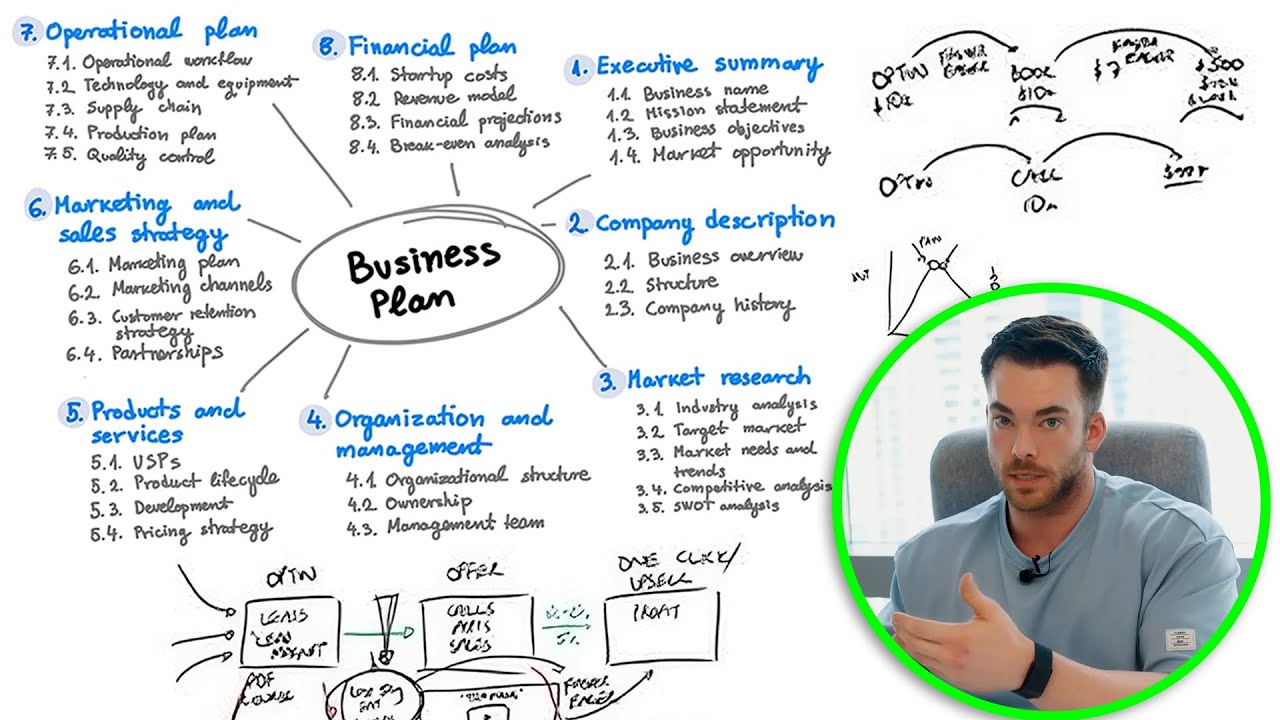
The volume math:
- Out of every 100 people you contact, about 30 reply.
- About 6 book calls.
- About 2 to 3 close.
At $1,500 to $3,000 a package, that adds up fast. Tech and funnels can come after your first sale.
My client Connor Jarby started while working full time. He reached out to his followers and landed a few sales. When those sales passed his 9 to 5 income, he left and went full time. Within four months he had tripled his investment in the program.
Use weekdays to sell and weekends to build
On weekdays I maintained and sold what I already had: outreach, sales calls and client coaching.
Weekends were for forging ahead. Running coaching calls, improving the program, fixing what was not working. Building a business early on means giving up some weekends. That is the trade.
Track three metrics
Track conversations (messages sent), calls booked and cash in. Focus on inputs, not outputs.
For example, 100 messages a day gets you about 30 replies, about 6 calls and about 1 close a day. Now you can forecast your week and your month.
When someone tells me their business “isn’t working,” I ask what their inputs are. If the answer is “I’m not tracking anything,” that is the problem. Paid ads can come later. Keep the early process simple.
Set your freedom number
Decide on a target income before you quit. I was earning about $3,000 a month as a server, so my rule was to quit once the business reliably brought in at least that much.
When I made $10,000 in my first week, I had more than enough cushion. It bought me an estimated 90 days to figure things out.
You can aim to replace your income or double it. Just be realistic and make sure your inputs match the target. Plenty of people aim for $10,000 a month while putting in the work for $3,000.
Once sales consistently outpace your job, leaving is far less risky than it looks. And full time output is roughly 10 times what you can do part time.
The takeaway
Two years of half figuring it out got me $2,000. A clear plan and the first $10,000 week made going all in an easy call.
- Pick a niche in health, wealth or relationships.
- Get a coach who has done it.
- Block 90 minutes every morning.
- Sell before you build.
- Use direct outreach for your first sales.
- Track messages, calls and cash in.
- Set your freedom number, then go full time when the business beats your job.
Want to know what’s holding your side business back? Take my free 90 Day Ceiling Plan. Answer 18 questions and get a written plan, built on your own numbers, that names the one thing holding you back and what to fix first.